
HOA or No HOA? Pros, Cons, and What Homebuyers Should Know Before Deciding
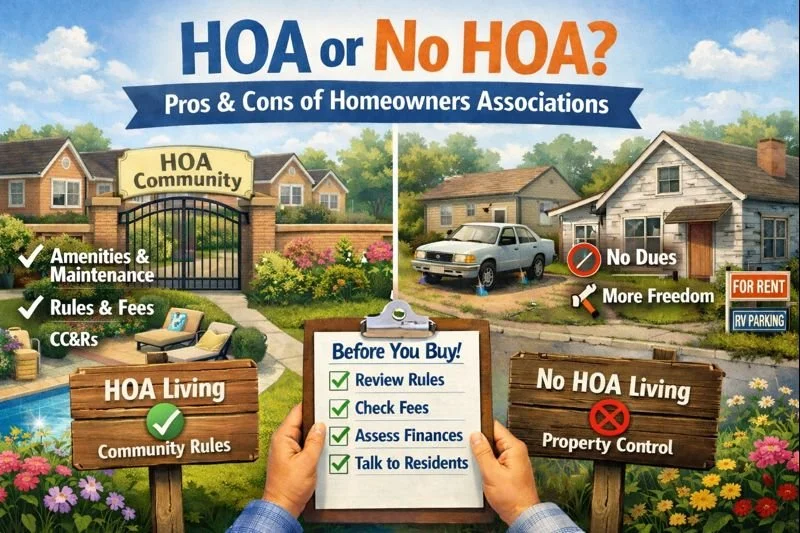
When buying a home, most people focus on price, location, and square footage. But one factor often overlooked—until it’s too late—is whether the neighborhood has a Homeowners Association (HOA).
An HOA can be a blessing for some buyers and a deal-breaker for others. Understanding the pros and cons before you make an offer can save you money, stress, and surprises down the road.
Here’s what every buyer should know.
What Is an HOA?
A Homeowners Association is a governing body that manages a neighborhood or community. HOAs set rules for properties, collect dues, and maintain shared spaces like entrances, pools, landscaping, or private roads.
HOAs are common in:
Subdivisions
Townhome and condo communities
Gated neighborhoods
Newer developments
✅ The Pros of Living in an HOA
1. Maintained Neighborhood Appearance
HOAs enforce rules that help keep homes and common areas well-kept. This can mean:
No abandoned cars in driveways
Consistent landscaping
Restrictions on neglected properties
Why it matters: A maintained neighborhood can protect property values over time.
2. Shared Amenities
Many HOAs provide amenities that would be expensive to maintain individually, such as:
Pools
Clubhouses
Playgrounds
Walking trails
Security gates
Why it matters: You get access to amenities without handling maintenance yourself.
3. Clear Rules and Expectations
HOAs provide written guidelines (called CC&Rs—Covenants, Conditions & Restrictions) that outline what is and isn’t allowed.
Why it matters: You know upfront what to expect from neighbors—and what they can expect from you.
4. Exterior Maintenance (Sometimes)
In condos or townhomes, HOAs often cover:
Roof repairs
Exterior paint
Lawn care
Why it matters: Less hands-on responsibility for homeowners.
❌ The Cons of Living in an HOA
1. Monthly or Annual Fees
HOA dues can range from modest to expensive, depending on amenities and services.
Why it matters: Fees are in addition to your mortgage, taxes, and insurance—and they can increase over time.
2. Rules Can Feel Restrictive
HOAs may regulate:
Paint colors
Fence styles
Parking
Yard décor
Short-term rentals
Why it matters: If you value flexibility or personalization, HOA rules may feel limiting.
3. Enforcement and Fines
Failure to comply with HOA rules can lead to:
Warning letters
Fines
Legal action (in extreme cases)
Why it matters: Enforcement styles vary—some HOAs are reasonable, others very strict.
4. Limited Control
HOAs are run by boards, often made up of volunteers. Decisions may not always align with your preferences.
Why it matters: You may pay for services or changes you don’t personally value.
🔍 What to Consider Before Buying a Home in an HOA
Before making an offer, review these key points carefully:
1. Review the HOA Documents
Ask for:
CC&Rs
Bylaws
Rules & regulations
Recent meeting minutes
Tip: Look for rules that conflict with your lifestyle (pets, parking, rentals, home businesses).
2. Understand the Fees
Ask:
How much are the dues?
What do they cover?
How often have fees increased?
Red flag: Low fees with high amenities may indicate future increases or underfunding.
3. Check the Financial Health
Strong HOAs maintain:
Reserve funds
Regular budgets
Transparent financial records
Why it matters: Poor finances can lead to special assessments—unexpected large bills.
4. Talk to Current Residents
If possible, ask neighbors:
How strict is enforcement?
Are disputes common?
Is the board responsive?
Why it matters: The culture of the HOA matters just as much as the rules.
HOA vs. No HOA: Which Is Right for You?
There’s no one-size-fits-all answer.
An HOA may be right for you if:
You value uniformity and shared upkeep
You want amenities without personal maintenance
You prefer clearly defined community standards
A non-HOA home may be better if:
You want full control over your property
You dislike monthly fees
You prefer flexibility and fewer restrictions
Final Thoughts
An HOA isn’t inherently good or bad—it’s about fit. The key is knowing what you’re agreeing to before you buy.
Taking the time to understand HOA rules, costs, and culture can help ensure your next home supports your lifestyle—not limits it.