
Selling a House with a Foundation Repair History — What You Really Need to Know
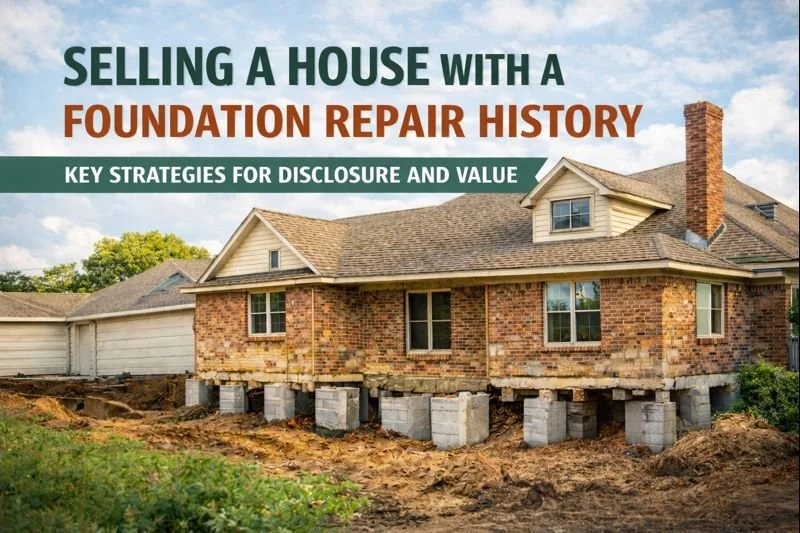
Selling a home with a history of foundation repair can raise questions for both sellers and buyers. Many homeowners worry that past foundation issues will automatically reduce their home’s value or make it harder to sell. In reality, a repaired foundation does not have to be a deal-breaker. With proper disclosure, clear documentation, and thoughtful positioning, foundation repair can be presented as evidence of responsible homeownership rather than a liability.
Disclosure Is Required — and It Builds Trust
Most sellers are legally required to disclose known material defects, including past foundation issues and completed repairs. Failing to disclose this information can lead to legal and financial consequences after closing.
Beyond legal requirements, disclosure plays a critical role in building buyer confidence. Buyers are often more comfortable with a home that had a known issue that was professionally corrected than with a property that may have hidden or unresolved structural concerns.
Local Market Insight: Shreveport–Bossier
In the Shreveport–Bossier market, foundation repairs are more common than many buyers expect. Expansive clay soils, aging housing stock, and seasonal moisture changes contribute to foundation movement, even in well-built homes.
Because of these conditions, a house with a professionally repaired and well-documented foundation is often viewed more favorably than one with an unclear structural history. Buyers in this market respond best to clarity and proof. Providing inspection reports, repair invoices, and transferable warranties helps reduce uncertainty and keeps transactions moving forward. Addressing foundation concerns before listing can also prevent extended time on the market and difficult renegotiations following inspections.
Documentation Matters as Much as the Repair
Buyers want confirmation that foundation work was completed properly. Sellers should be prepared to share documentation such as engineering evaluations, detailed repair invoices, scopes of work, and transferable warranties when available.
This information reassures buyers, inspectors, and lenders that the foundation has been stabilized and reduces the likelihood of surprises late in the transaction.
How Foundation Repairs Affect Home Value
Foundation repairs typically restore value rather than increase it. While cosmetic updates may enhance appeal, structural repairs are about returning the home to a stable, marketable condition.
Homes with unresolved foundation problems often experience reduced buyer interest and aggressive price negotiations. Completed repairs, when properly documented, help protect value and limit the risk of price reductions during the inspection phase.
Positioning the Repair the Right Way
Attempting to hide or minimize foundation repair history can create suspicion. A more effective strategy is to clearly explain what was done, why it was done, and how it improves the home’s long-term stability.
When handled transparently, foundation repair can be presented as a solved issue rather than an ongoing concern.
Final Thoughts
A foundation repair history does not have to derail a home sale. In markets like Shreveport–Bossier, where foundation movement is relatively common, professional repairs paired with clear documentation often strengthen buyer confidence rather than weaken it.
As noted by industry experts such as Stable Home Foundation Repair LLC, a repaired and documented foundation is far preferable to one left unaddressed or unknown.
Learn more at: https://www.stablehomefoundations.com