
The Sweet History of King Cake: A Mardi Gras Tradition with Royal Roots 👑🎭
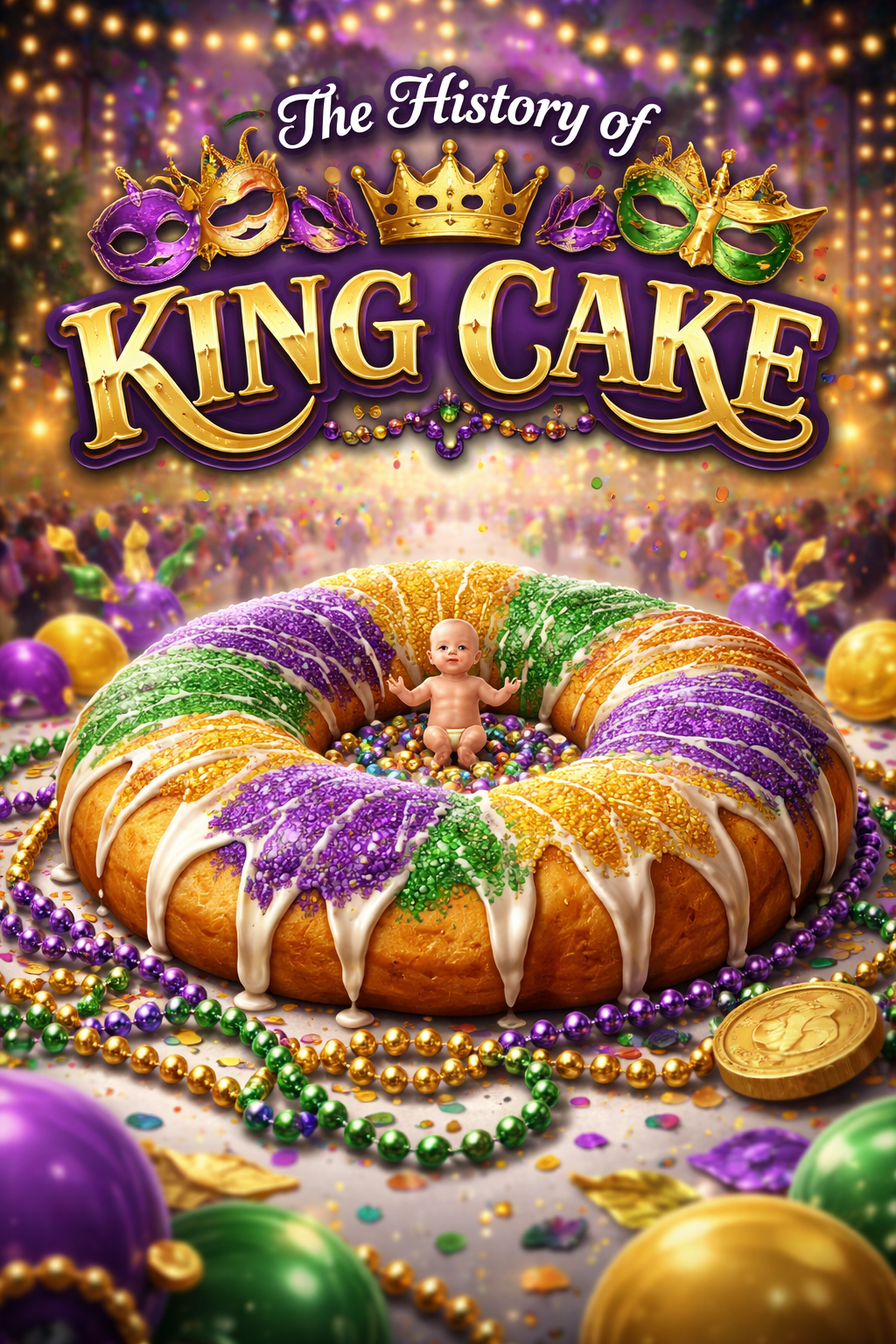
When Mardi Gras season rolls around, beads start flying, parades start rolling, and bakery windows begin filling with one very important centerpiece: the King Cake.
Colorful, sugary, and crowned in purple, green, and gold, King Cake isn’t just a dessert — it’s a symbol of celebration, community, and centuries of tradition.
Let’s take a look at how this iconic Mardi Gras treat came to be.
👑 Royal Beginnings: The Feast of the Epiphany
The story of King Cake begins long before Bourbon Street and parade floats.
King Cake traces its origins to Europe, specifically to celebrations of the Epiphany, also known as Twelfth Night, observed on January 6. The Epiphany commemorates the visit of the Three Wise Men (or Kings) to the baby Jesus — hence the “King” in King Cake.
In medieval France and Spain, families celebrated by baking a round cake to represent a crown. Hidden inside the cake was a small bean, coin, or trinket. Whoever found the surprise was crowned “king” (or queen) for the day and often hosted the next celebration.
The tradition was festive, a little competitive, and always centered around community — themes that still define Mardi Gras today.
🎉 From Europe to Louisiana
French settlers brought the King Cake tradition to Louisiana in the 18th century. Over time, it became closely tied to Carnival season — the period between Epiphany (January 6) and Mardi Gras (Fat Tuesday).
By the 19th century, King Cake had become a staple of New Orleans Carnival balls and social gatherings. It wasn’t originally the bright, icing-covered pastry we recognize today. Early versions were more like a simple French galette or brioche-style bread.
As Mardi Gras celebrations grew more elaborate, so did the cake.
💜💚💛 The Meaning Behind the Colors
The now-iconic sugar colors represent traditional Mardi Gras symbolism:
Purple – Justice
Green – Faith
Gold – Power
These colors were officially selected in 1872 by the Rex organization, one of New Orleans’ oldest Mardi Gras krewes, and they’ve been part of Carnival branding ever since.
🧁 The Baby Inside: A Modern Twist
Originally, the hidden item inside King Cake was a dried bean or pecan. In the mid-20th century, a small plastic baby became the standard.
The baby represents the Christ child — but it also adds a playful twist. Whoever finds the baby in their slice traditionally:
Hosts the next King Cake party
Buys the next cake
Or is considered lucky for the year
In offices, schools, and neighborhoods across Louisiana, this friendly tradition keeps the cakes circulating all season long.
🍰 Evolution of the King Cake
What started as a simple European pastry has evolved into countless varieties:
Classic cinnamon-filled brioche
Cream cheese
Strawberry or raspberry
Praline pecan
Chocolate
Savory versions
Even extravagant, over-the-top specialty flavors
Bakeries across Louisiana compete every year for the most creative — and most delicious — version.
🎭 More Than a Dessert
King Cake is more than frosting and sugar.
It marks the beginning of Carnival. It brings people together at parties, parades, and office break rooms. It carries centuries of tradition from Europe to Louisiana. And it signals that it’s time to celebrate before the reflective season of Lent begins.
From a medieval bean baked into bread to the colorful pastry we know today, King Cake has traveled across continents and centuries — all to land on your plate with a sprinkle of purple, green, and gold.
So the next time you cut into a slice, remember: you’re participating in a tradition that’s both royal and delicious.
And if you find the baby… well, looks like you’re buying the next one. 🎉