
From Silver Bayou to Cross Lake: The Story Behind One of Shreveport’s Most Treasured Waters
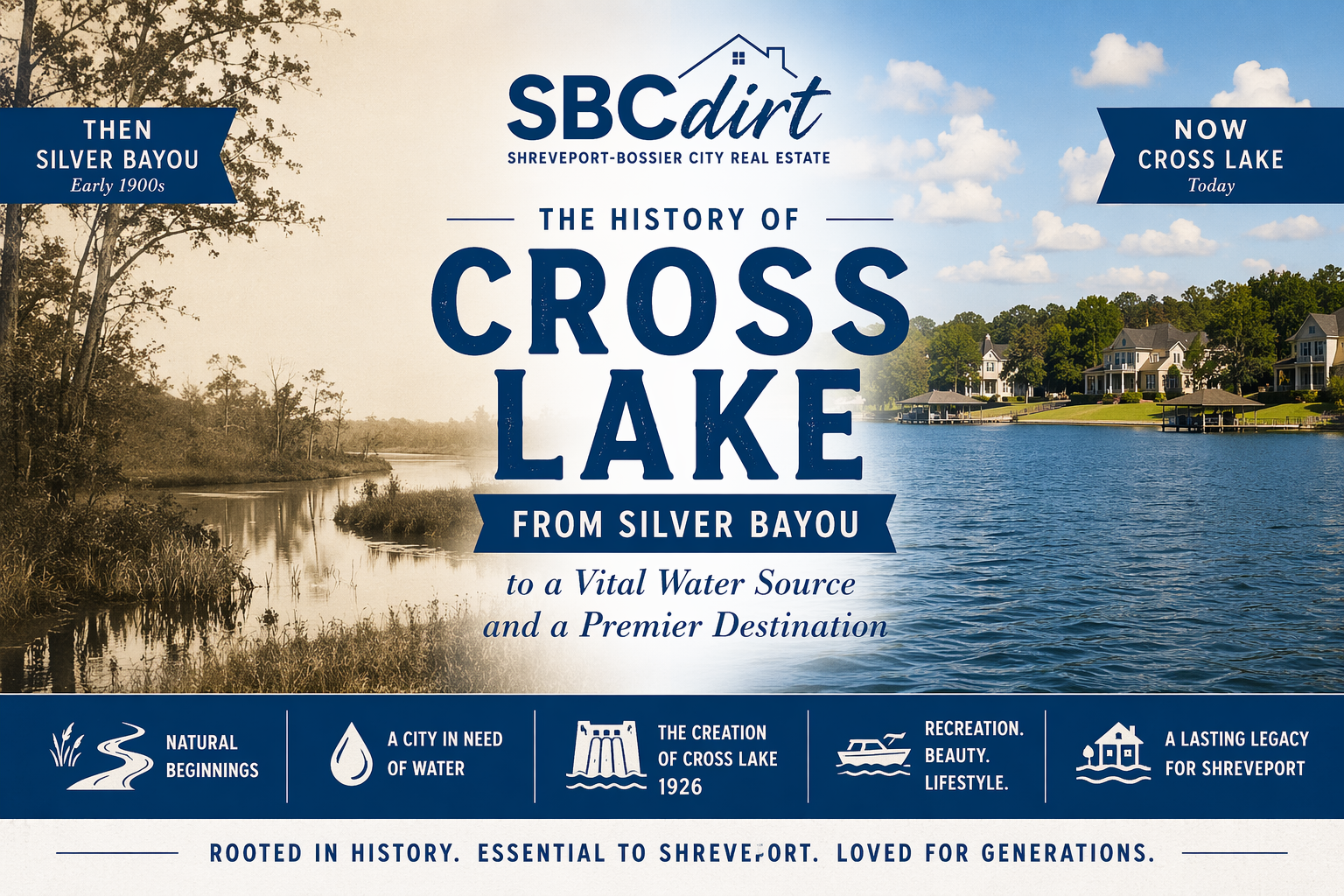
Long before it became one of Shreveport’s most recognizable recreational and residential landmarks, Cross Lake had a very different identity—and a very different name.
It was once known as Silver Bayou.
The Natural Beginnings
In its earliest form, Silver Bayou was not a lake at all, but a winding natural waterway. It meandered through low-lying land west of present-day Shreveport, part of a broader network of bayous, wetlands, and backwater systems tied to the Red River.
This landscape was dynamic and often unpredictable. Seasonal flooding would expand the bayou’s footprint, while drier periods would shrink it back to a narrower channel. The area was rich in wildlife and vegetation, but it wasn’t particularly suited for large-scale development.
A City in Need of Water
By the early 1900s, Shreveport was growing—and with that growth came a pressing need: a reliable municipal water supply.
At the time, the Red River served as the city’s primary source of water. However, it came with significant challenges:
High sediment levels
Frequent flooding
Inconsistent water quality
City leaders began searching for a more stable, cleaner source. Their solution would forever change Silver Bayou.
The Creation of Cross Lake
In the 1920s, Shreveport undertook an ambitious infrastructure project: transforming Silver Bayou into a controlled reservoir.
A dam was constructed, flooding the surrounding lowlands and converting the natural bayou into what we now know as Cross Lake. The project was completed in 1926, and the lake quickly became the city’s primary drinking water source.
The name “Cross Lake” is believed to come from the way the water body crosses the natural landscape and intersects former bayou paths—though like many local names, its exact origin has a bit of folklore attached.
More Than Just a Water Source
While Cross Lake was created out of necessity, it didn’t take long for it to become something more.
Over time, the lake evolved into:
A recreational destination for boating and fishing
A scenic backdrop for some of Shreveport’s most desirable homes
A defining natural feature of west Shreveport
Development around the lake has always been shaped by its primary purpose as a water supply. Regulations and protections have helped preserve its natural beauty—one of the reasons Cross Lake still feels relatively untouched compared to other urban lakes.
A Lasting Legacy
Today, it’s easy to take Cross Lake for granted. It’s simply “there”—a place for sunsets, weekend boat rides, and waterfront living.
But beneath that calm surface is a story of transformation:
From a natural bayou system
To a critical piece of city infrastructure
To one of the most iconic lifestyle features in the Shreveport market
Understanding its origins as Silver Bayou adds a layer of appreciation for what Cross Lake represents today—a blend of nature, engineering, and long-term vision.
Why It Still Matters Today
For homeowners, buyers, and investors, Cross Lake isn’t just a body of water—it’s a lifestyle driver.
Properties near the lake often benefit from:
Strong long-term desirability
Limited inventory due to geographic constraints
Unique views and recreational access
And unlike many modern developments, Cross Lake wasn’t manufactured for aesthetics—it was built out of necessity, which makes its presence feel authentic and enduring.
From Silver Bayou to Cross Lake, this is more than a name change—it’s a story of how Shreveport adapted, grew, and built something that still defines the city today.